Through the Okanagan — where lakes, orchards and vineyards turn the road trip into a slower way of travelling.
Osoyoos changes the rhythm of the journey.
For the first three chapters, much of our story has been about movement.
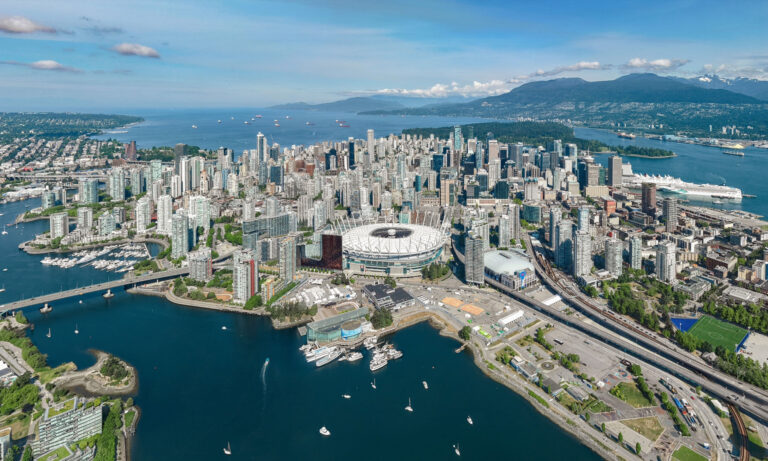
Leaving Vancouver.
Crossing the Fraser Valley.
Climbing into the Cascades.
Passing through Manning Provincial Park.
Descending into Princeton and following the Similkameen Valley toward the dry landscapes of South Okanagan.
Now we turn north.
The mountains are still around us, but for a while they stop being the main character.
Instead, the road begins following water.
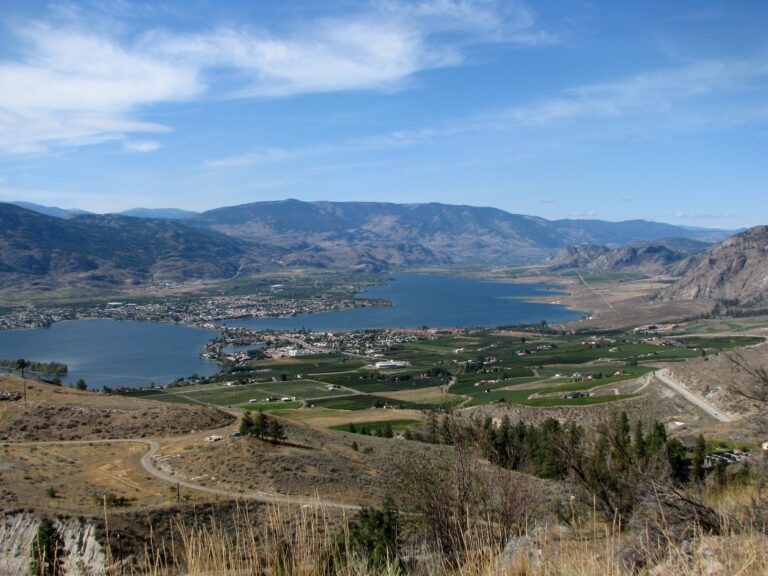
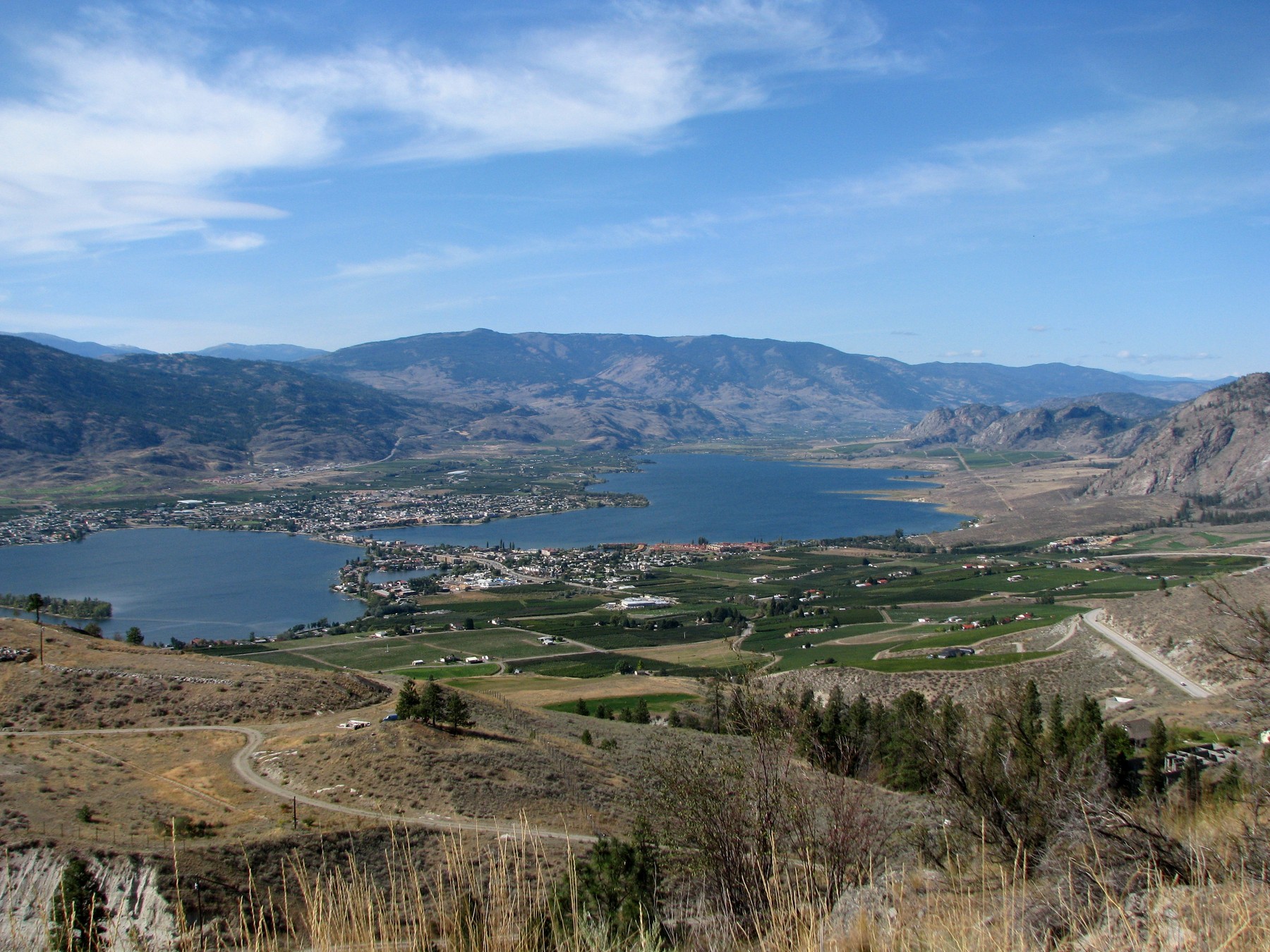
Osoyoos Lake.
Then vineyards and orchards around Oliver.
Skaha Lake.
Penticton.
The Naramata Bench.
And finally the long blue expanse of Okanagan Lake leading toward Kelowna.
This is the lifestyle chapter of our Pacific-to-Rockies journey.
And it is a section where travelling more slowly makes almost everything better.
Leaving Osoyoos: North Through Wine Country
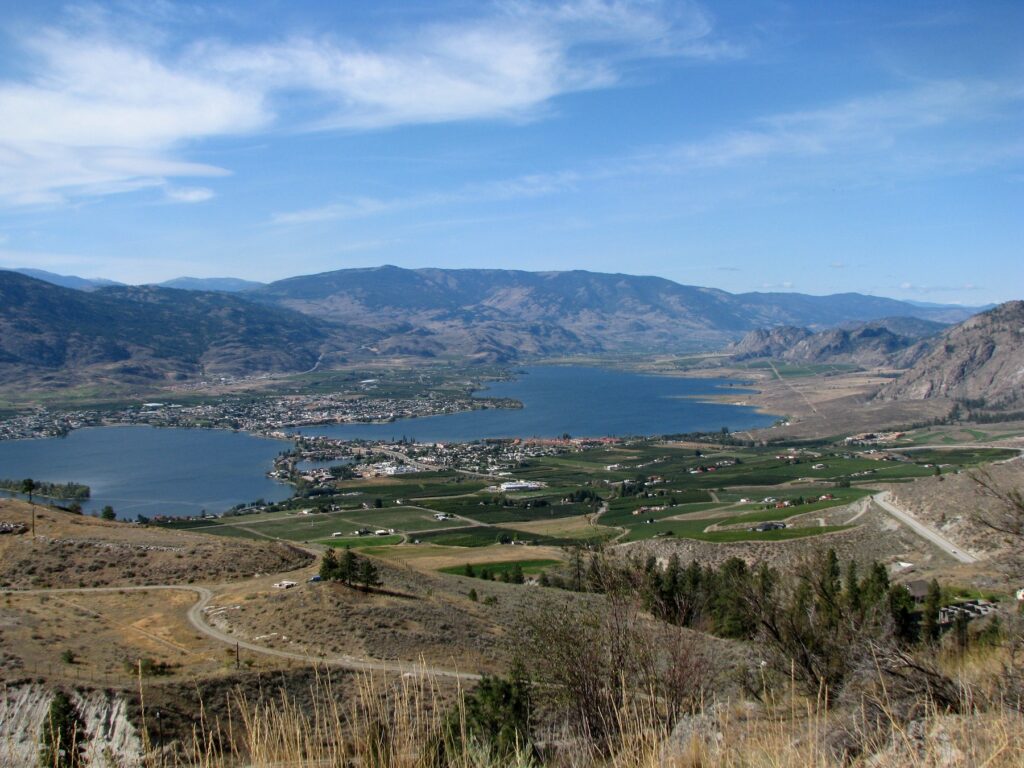
Leaving Osoyoos, Highway 97 heads north through the South Okanagan.
Almost immediately, the landscape tells you what this region is about.
Dry hills rise above the valley.
Green vineyards run across lower slopes.
Orchards occupy irrigated land.
Small wineries appear beside country roads.
The contrast is striking.
Without irrigation, much of the surrounding landscape would remain dry and brown.
With water, the valley produces grapes, cherries, peaches, apples and other crops.
The result is one of British Columbia's most distinctive agricultural landscapes.
Oliver
Canada's Wine Country on the Roadside
North of Osoyoos lies Oliver.
For travellers interested in wine, food and agriculture, this is not simply another town between destinations.
The surrounding landscape is filled with vineyards.
Some stretch across gentle slopes.
Others sit below dry, rocky hills.
And unlike a wine region experienced only through a tasting room, travelling through the Okanagan lets you see how closely the vineyards are connected to the geography around them.
The dry climate matters.
The sunlight matters.
The slopes matter.
Water matters.
The wine begins with the landscape.
Roadside Okanagan
Fruit Is Part of the Journey
The agricultural story that began around Keremeos continues here.
Depending on the season, roadside markets and farm stands can become part of the drive.
Cherries.
Peaches.
Apricots.
Apples.
Pears.
Tomatoes.
The exact produce changes as the growing season progresses.
That makes the experience seasonal in a very literal way.
Drive the same road at another time of year and the valley can look — and taste — different.
For us, this is part of what makes the Okanagan special.
It is not simply somewhere to look at.
It is somewhere to eat.
Skaha Lake
Water Returns to the Centre of the Landscape
Continue north and the road reaches Skaha Lake.
After the dry hills and vineyards of the South Okanagan, the lake changes the scale of the landscape.
Blue water stretches between mountain slopes.
Beaches and communities sit along the shoreline.
The road begins to feel less like a mountain crossing and more like a summer journey through lake country.
This is another transformation in our route.
Not as dramatic as crossing the Cascades.
Not as surprising as arriving in Osoyoos.
But important.
The road trip is becoming slower.
Penticton
Between Two Lakes
Penticton occupies an unusual position.
Okanagan Lake lies to the north.
Skaha Lake lies to the south.
The city sits between them.
That geography gives Penticton much of its character.
Water is never far away.
Neither are vineyards, orchards and the dry hills of the Interior.
For a road traveller, Penticton is an excellent place to stop for lunch, walk beside the lake or simply spend a few hours outside the car.
But there is another reason to pause here.
Just north of the city lies one of the most distinctive wine landscapes in British Columbia.
Naramata Bench
Vineyards Above Okanagan Lake
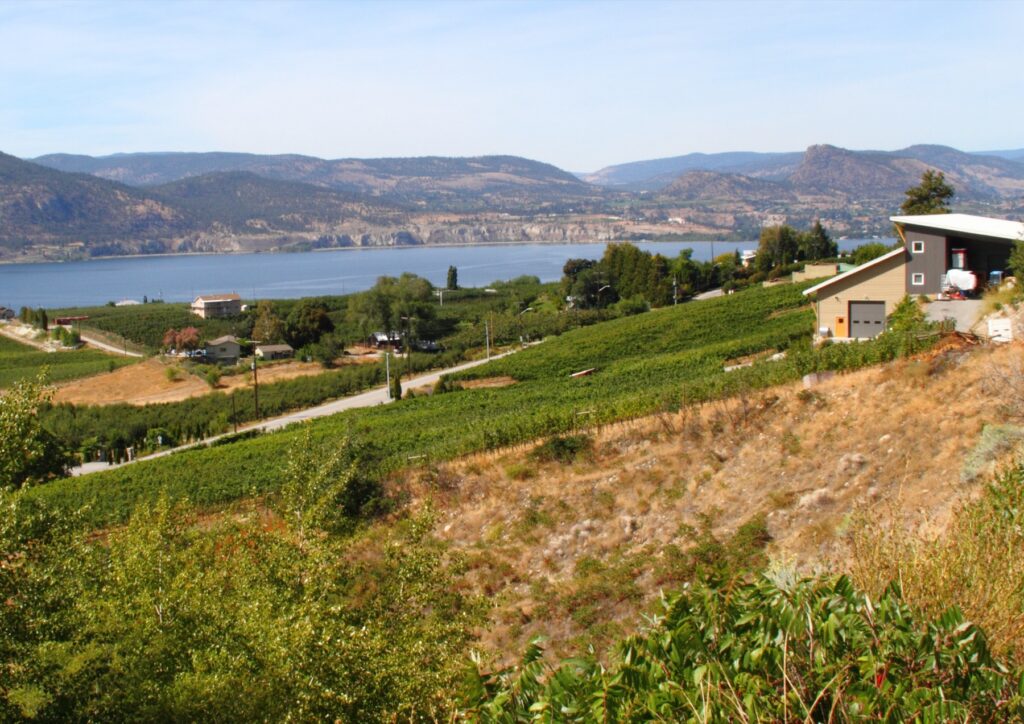
The Naramata Bench rises above the eastern shore of Okanagan Lake.
This is where several elements of the Okanagan landscape come together in one view:
vineyards in the foreground,
the lake below,
dry hills beyond,
and mountains framing the valley.
It is an ideal landscape for slow travel.
The point is not to visit as many wineries as possible.
Choose fewer.
Stay longer.
Have lunch.
Walk.
Look across the lake.
Let the geography become part of the experience.
More Than Wine
It would be easy to reduce the Okanagan to wineries.
That would miss much of what makes the region interesting.
This is also orchard country.
Lake country.
Cycling country.
Farm country.
A place for swimming, paddling and walking beside the water.
Parts of the historic Kettle Valley Rail Trail also pass through the region, offering another way to experience the landscape at a much slower speed than Highway 97.
The Okanagan works because these experiences overlap.
Food comes from the landscape.
Wine comes from the landscape.
Outdoor life happens in the same landscape.
The lake ties much of it together.
Following Okanagan Lake North
Leaving Penticton and the Naramata area, our journey continues north toward Kelowna.
Okanagan Lake becomes the defining feature of the route.
It is long enough that the landscape seems to organize itself around the water.
Communities.
Orchards.
Vineyards.
Beaches.
Marinas.
Hillsides.
The lake is not simply something beside the road.
It is the centre of the region's geography and lifestyle.
Kelowna
Where the Okanagan Becomes a Lifestyle
By the time we reach Kelowna, the journey feels very different from the one that began in Vancouver.
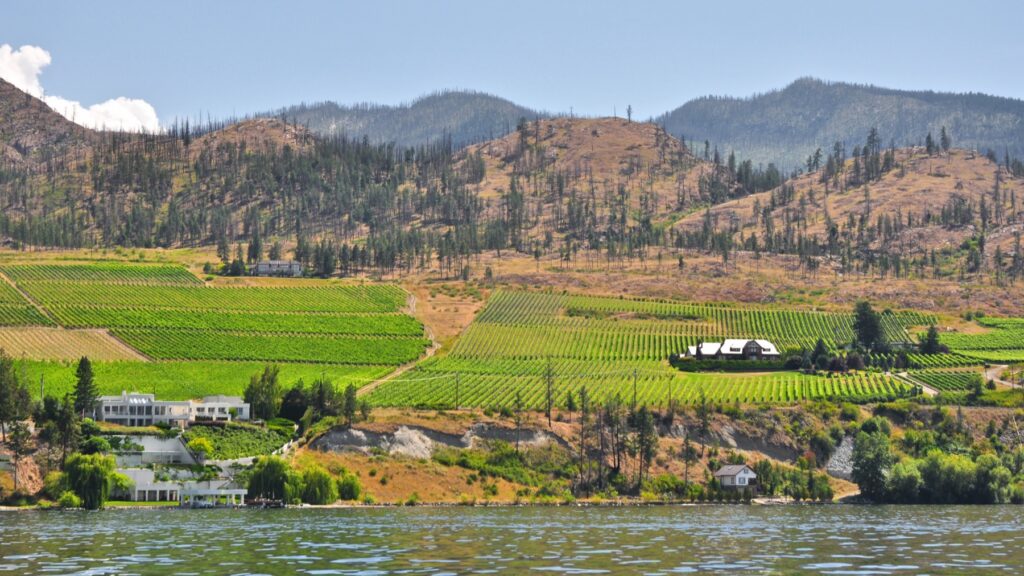
Kelowna is the largest urban centre in the Okanagan Valley, but its identity remains closely connected to the lake and the agricultural landscape around it.
Okanagan Lake defines the western edge of downtown.
Vineyards and orchards remain within easy reach.
Restaurants draw on local agriculture.
Boats, kayaks and paddleboards become part of the summer landscape.
This is not simply a place to pass through on the way to the Rockies.
Kelowna deserves time.
Stay a Little Longer
If Osoyoos was where we suggested slowing down, Kelowna is where that advice becomes even stronger.
Consider staying one or two nights.
Spend time beside the lake.
Visit a winery.
Eat somewhere that works with local ingredients.
Walk downtown.
Visit an orchard or farm market in season.
Rent a kayak or paddleboard.
Or do very little.
A good road trip does not need every day to be filled with driving.
Sometimes stopping is part of the route.
From Mountain Journey to Okanagan Lifestyle
The progression from Osoyoos to Kelowna looks like this:
Osoyoos
Semi-arid hills · lake · vineyards
↓
Oliver
Wine country · agriculture · dry valley
↓
Skaha Lake
Water · beaches · Interior mountains
↓
Penticton
Two lakes · food · outdoor life
↓
Naramata
Vineyards · lake views · slow travel
↓
Kelowna
Okanagan Lake · food · wine · urban lifestyle
This section is less about overcoming geography.
It is about living within it.
A Simple Osoyoos → Kelowna Road-Trip Plan
| Section | Experience |
|---|---|
| Osoyoos → Oliver | Vineyards, orchards and South Okanagan agriculture |
| Oliver → Skaha Lake | Dry hills gradually reconnect with lake country |
| Penticton | Lunch, waterfront, beaches and a relaxed stop between two lakes |
| Naramata Bench | Vineyard landscapes, lake views and slow travel |
| Kelowna | Food, wineries, waterfront and outdoor lifestyle; consider 1–2 nights |
Season note: Winery hours, fruit stands, farm markets and water activities vary considerably by season. Check individual operators before travelling.
Why This Section Matters
If every day of a road trip is about reaching the next destination, the journey eventually becomes another schedule.
The Okanagan offers an alternative.
Stay somewhere longer.
Buy food grown nearby.
Spend an afternoon beside the lake.
Choose one winery instead of five.
Take a bicycle instead of the car.
This is another version of Western Canada.
And experiencing that difference is the reason we chose this route.
Next Journey
Part 5 — Kelowna to Revelstoke
North and east of Kelowna, the landscape will change again.
The vineyards gradually begin to disappear.
Forests return.
The road approaches Shuswap Lake.
We pass through lake communities and continue toward Sicamous.
Then the mountains begin closing around us.
Ahead lies Revelstoke.
The relaxed Okanagan chapter is ending.
The mountain journey is about to begin again.
*Next: From Pacific to Rockies — Part 5: Kelowna to Revelstoke.***
FROM PACIFIC TO ROCKIES
Vancouver → Hope → Manning Park → Princeton → Keremeos → Osoyoos → Oliver → Penticton → Naramata → Kelowna → Shuswap → Revelstoke → Golden → Yoho → Lake Louise → Banff → Canmore
Ocean. Valleys. Lakes. Vineyards. Mountains. One unforgettable journey.
Explore Canada. Remember the Journey.